
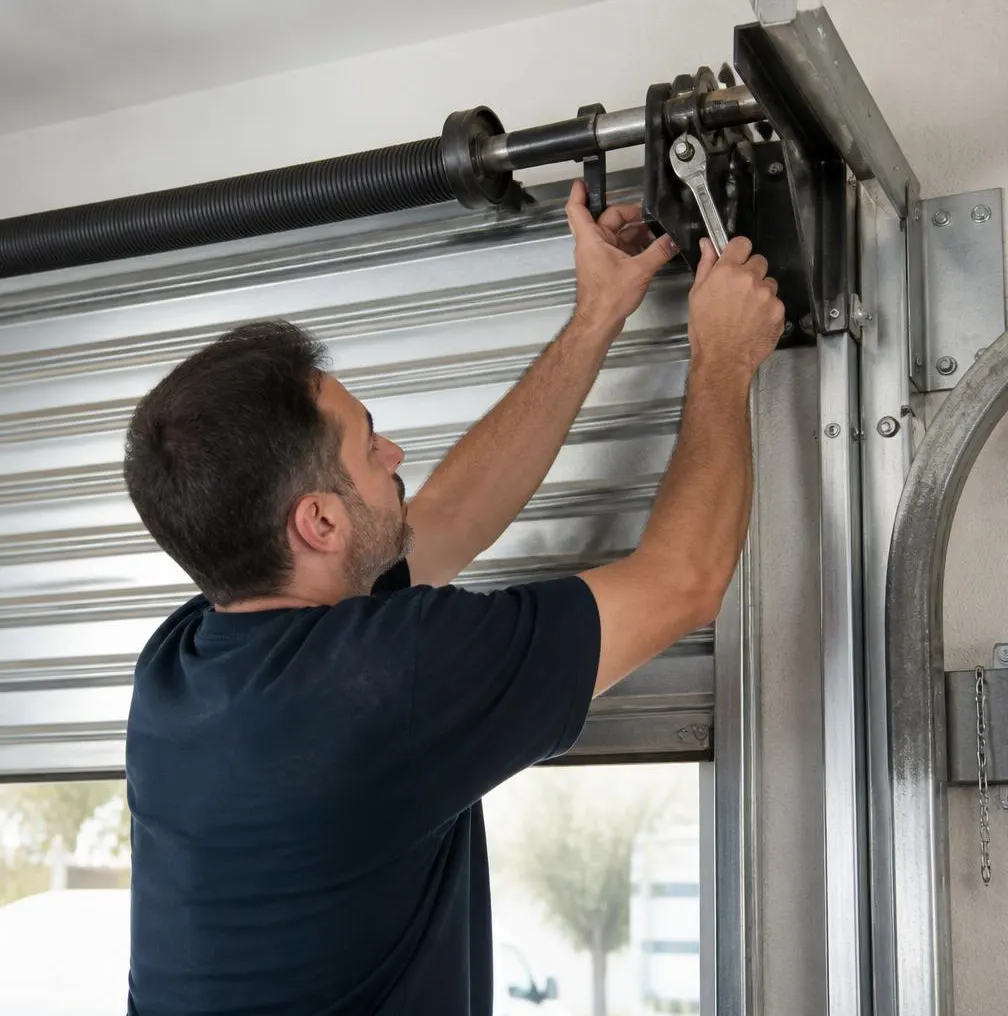
If your garage door opens smoothly, seals tight, and reverses when it hits an obstruction, you're mostly set for winter. The exceptions are homes that sat empty over the humid months, doors near the coast with any visible rust, and anyone whose weatherstripping or rollers haven't been looked at since before hurricane season started.
Winter in Boynton Beach doesn't mean snow and ice, but it's not a non-event for your garage door either. The shift from thick summer humidity to drier air, combined with sharp temperature drops when cold fronts roll through, puts different stress on the door than the wet, heavy months do. A little attention now prevents the kind of surprise failure that tends to show up in January or February, right when out-of-town family or snowbird tenants are counting on the door working.
What the Dry Season Actually Does to a Garage Door
After months of high humidity, South Florida's winter air dries out considerably. Wood-composite panels and door seals that swelled during summer can shrink back, which sometimes leaves gaps at the bottom or sides that didn't exist in August. Metal hardware that collected moisture may now be dry and gritty instead of just damp, which accelerates wear on rollers and hinges if they haven't been lubricated recently.
Cold fronts also bring something people don't associate with Florida: real wind gusts. These aren't hurricane-force events, but a strong front pushing through can rattle a door that's slightly off its track or has loose hardware, especially on garage doors rated for higher wind loads where every panel and brace is doing a job. If a track bracket worked loose during a summer storm and nobody noticed, a brisk winter front is often what finally reveals it.
A Practical Pre-Winter Checklist
- Lubricate moving parts. Use a silicone or lithium-based garage door lubricant (not WD-40, which attracts grit) on rollers, hinges, and the torsion spring. Do this now if it hasn't happened since spring.
- Check the weatherstripping. Run a hand along the bottom seal and side seals. If they've shrunk, cracked, or pulled away from the frame, replace them before cooler, drier weather makes them brittle enough to tear.
- Test the auto-reverse safety feature. Place a block of wood on the ground under the door and close it. The door should reverse on contact. If it doesn't, that's not a winter issue specifically, but it's worth catching before the door gets more use from holiday guests and deliveries.
- Inspect for rust. Coastal salt air works on exposed hardware year-round, but it's easiest to spot rust starting on springs, tracks, and hinges when you're already doing a seasonal check. Light surface rust can be addressed with a wire brush and touch-up paint; pitting or flaking on a spring means it needs replacing, not touching up.
- Tighten loose hardware. Check bolts on the track brackets and the header plate. Vibration from regular use loosens these gradually, and a cold front's wind gusts will find any slack.
- Check the opener's battery backup. If your opener has one, winter's drier conditions are actually easier on batteries than summer heat, but it's still worth testing that the backup kicks in during a power outage, since outages can happen with fast-moving fronts.
- Clean and test the photo-eye sensors. Dust and pollen that built up over the fall can block the sensors just enough to cause intermittent reversal issues. Wipe both lenses and confirm they're aligned.
If You've Been Away for the Summer
Plenty of homes in this area sit empty for stretches during the hot, humid months, and a garage door that hasn't moved in weeks often shows it. Common issues on return:
- Rollers and hinges that feel stiff or grind, from humidity sitting on unused metal
- A door that's noticeably harder to lift by hand, which can mean a spring has started to weaken while idle
- Weatherstripping that's swollen shut against the frame, making the door stick slightly as it closes
- A dead remote or keypad battery, and sometimes a dead backup battery in the opener itself
- Signs of pests or nesting material along the bottom seal or inside the track
None of this is usually serious, but it's worth a full cycle test — open, close, open again — before relying on the door daily, rather than discovering a problem the first time you're rushing out the door.
When the Wind Actually Matters
Garage doors in this part of Florida are generally built or retrofitted to handle wind load, which matters most during hurricane season but doesn't disappear in winter. A cold front with sustained gusts can still flex a door that's misaligned or has a bowed track. If you notice the door shuddering, bowing visibly in the middle, or making a banging noise during a windy afternoon, don't wait until summer to deal with it — track alignment problems tend to get worse, not better, on their own.
When to Call Boynton Beach Door & Opener
If your checklist turns up stiff rollers that won't loosen with lubrication, cables that look frayed, or a door that feels heavier than it used to when lifted manually, those are signs for a professional look rather than a DIY fix. Our Garage Door Maintenance & Tune-Up service covers a full inspection — springs, cables, rollers, track alignment, and opener function — so small issues get caught before a cold front or a busy holiday week turns them into a stuck door. If something's already gone wrong, our Garage Door Cable & Roller Repair and spring replacement services get it back in safe working order quickly.
If you're in Boynton Beach, Delray Beach, Lake Worth Beach, Boca Raton, Lantana, Greenacres, Wellington, or Hypoluxo and want your garage door checked before winter gets going, call Boynton Beach Door & Opener and we'll have a technician out to take a look.