
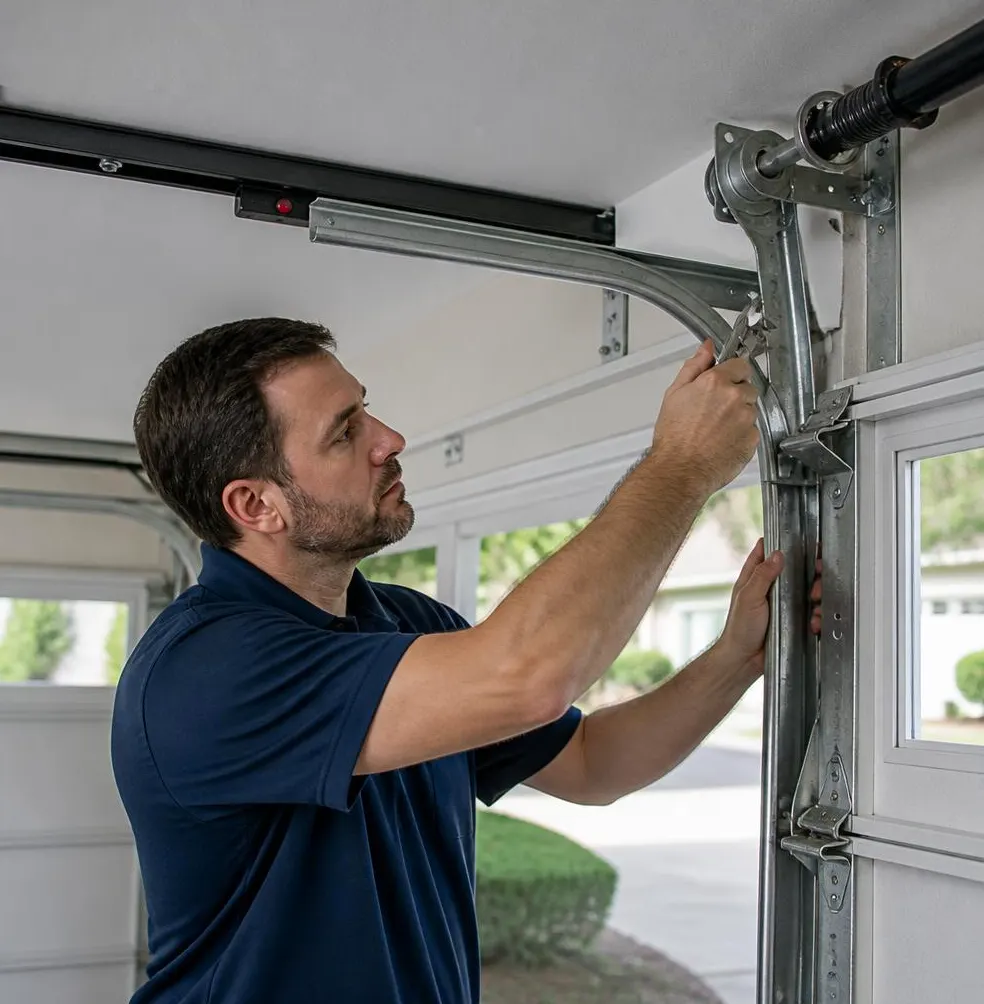
The Morning the Door Won't Cooperate
You hit the wall button on your way out and the door groans, hesitates, then inches up like it's dragging something. Or it doesn't move at all until you give the remote a second and third press. This usually happens on one of those cooler November mornings after an overnight downpour, when the garage still smells like rain and the slab outside the door is damp. Your first thought might be that something froze — but this is Palm Beach County, not Minnesota. What's actually happening is almost always moisture, swelling, or corrosion, not ice.
Before you assume the worst, it helps to know what a technician looks for, and in what order, when a door is sluggish instead of silent and smooth.
What You'll Notice First
- The door feels stuck at the bottom, as if the weatherstripping is glued to the concrete.
- It moves unevenly, jerking or stalling partway up instead of gliding.
- The opener strains — you hear the motor working harder than usual, or the door reverses on its own.
- One side lags behind the other, so the door looks slightly crooked as it travels.
- Manual operation is heavy — disconnecting the opener and lifting by hand takes noticeably more effort than normal.
None of these symptoms require freezing temperatures. They show up because South Florida's garage doors live in a cycle of heat, humidity, salt air, and sudden storms — and that combination stresses hardware in ways that mimic what colder climates blame on ice.
What a Technician Checks, in Order
1. Weatherstripping Swollen Against the Slab
This is the first and most common culprit. The rubber seal along the bottom of the door absorbs humidity and swells slightly, especially after a hard rain. If the garage floor isn't perfectly level or has a slight lip where water pools, the swollen seal can feel like it's bonded to the concrete. The fix is simple: trim or replace the weatherstripping if it's cracked, stretched, or waterlogged, and make sure the track above it is clear so the door doesn't have to fight the seal to get started.
2. Track Buildup and Dried-Out Lubricant
Next, a technician inspects the tracks and rollers for grit — a mix of salt residue from coastal air, pollen, and dust that turns old grease into a gummy paste. This buildup acts like brakes on the rollers, especially after humidity thickens whatever lubricant is left. The fix involves wiping the tracks clean with a dry cloth, checking for any dents or bends, and applying a silicone-based garage door lubricant to rollers, hinges, and the torsion spring. Avoid WD-40 or household oils; they attract more dust and wash out fast in humid air.
3. Rust on Rollers, Hinges, or Track Bolts
Salt air near the coast accelerates corrosion on exposed metal parts. Rollers that look fine on a dry day may be slightly pitted or seized after weeks of humidity and salt exposure, causing them to drag instead of spin freely in the track. A technician will check each roller by hand, looking for ones that don't turn smoothly or show rust streaks. Depending on severity, this means lubrication and cleaning for mild cases, or roller and hinge replacement for anything pitted or frozen in place — nylon rollers with sealed bearings hold up better long-term in this climate than steel.
4. Spring Tension Shifted by Temperature and Moisture
Torsion springs expand and contract slightly with temperature swings, and a cool snap combined with high humidity can change how much resistance the opener has to overcome. If the door feels heavy even after the track and rollers check out fine, the spring tension may need adjustment. This is not a DIY step — torsion springs are under extreme tension and adjusting them requires specific tools and experience. A technician will test the balance by disconnecting the opener and seeing whether the door holds position halfway open; if it drifts up or down, the spring needs recalibration or replacement.
5. Opener Settings and Gear Wear
If the door moves unevenly or the motor strains, the last check is the opener itself. Humidity can cause minor gear wear over time, and force or limit settings that were fine during the dry season sometimes need adjusting once the door's resistance changes. A technician will test the opener's force settings, inspect the drive gear for wear, and confirm the safety reversal sensors aren't misaligned from vibration or moisture swelling the mounting brackets.
Why Order Matters
Checking weatherstripping and tracks before touching the springs or opener saves time and money. Most sluggish-door calls turn out to be moisture and debris issues that take fifteen minutes to resolve, not spring or motor failures. But if the simple fixes don't restore smooth movement, working through hinges, springs, and the opener in sequence rules out the easy answers first and avoids replacing parts that weren't actually the problem.
When to Call Boynton Beach Door & Opener
If your door is still dragging, crooked, or straining the opener after you've wiped down the tracks and applied fresh lubricant, it's time to call in a technician. We handle Garage Door Cable & Roller Repair for corroded or seized hardware, and Garage Door Maintenance & Tune-Up service to rebalance springs, clean tracks, and adjust opener settings before the next round of storms rolls through. Catching this early keeps a sluggish door from turning into a stuck one during hurricane season, when you need it working reliably.
If your garage door is dragging, sticking, or straining this season, call Boynton Beach Door & Opener for a fast, local inspection and tune-up.